
HaBilNet congratulates Dr. Lourdes Ortega
on her HaBilNet Distinguished Fellowship for 2026.
News
On this page you find a selection of items about our members, activities, bilingual development, and bilingualism.
Joint colloquium in Japan focusing on well-being
Keynote in Italy
HaBilNet Director Annick De Houwer held a keynote talk at the XXXIV CONGRESSO NAZIONALE AIRIPA su 'BES E DISTURBI DELL'APPRENDIMENTO' (the 34th national AIRIPA congress on Special Educational Needs and Learning Disabilities) in Cremona, Italy, on Sept. 19, 2026. She tried to answer the question "What is "normal" in children's bilingual development?". Find out more about the congress here.
4 jaren "Ik breng mijn taal mee naar school": Van harte gefeliciteerd!!

Ook al is de financiële steun van HaBilNet afgelopen, blijft PIM dit unieke project verderzetten. Proficiat voor het fantastische werk dat tot nu toe werd geleverd, dat het welbevinden van gezinnen heeft bevorderd!
Curriculum design for participatory-, community-based language learning
This HaBilNet-funded project directed by HaBilNet-Follower Meagan Driver builds on previous youth participatory research in Greece to collaboratively design a curriculum grounded in critical, participatory, and community-based approaches to language learning. Extending Fulbright-supported research conducted in Greece, Argentina, and Austria, the project advances a multi-country collaboration among educators while promoting multilingual awareness and intercultural understanding. The current phase focuses on the development of curricular materials, instructional strategies, teacher training, and scaffolding resources for a curriculum that positions language learners as active decision-makers, engages them in critical pedagogies, and fosters real-world linguistic awareness and well-being.
HaBilNet Distinguished Fellow highlighting bilingual well-being in Belgium
Check out the program here.
HaBilNet Distinguished Fellow highlighting bilingual well-being in Hong Kong
Check out the program here.
Meeting with a pioneer

In bilingual settings, family relationships and family members' well-being can be negatively affected because of how family members use the languages involved. This leads to a lack of Harmonious Bilingualism. Dr. Jean-Jacques Kress, professor em. of psychiatry at the University of Brest, France, was likely the very first to write about this *. In March 2026, HaBilNet Director Annick De Houwer had the great honor and pleasure of meeting Dr. Kress. Many thanks to Mr. Jean-Luc Vidalenc for making the meeting possible.
* Kress, Jean-Jacques. 1984. Changement de langue et traumatisme psychique. Psychologie médicale 16(8). 1369-1373.

AAAL Distinguished Scholarship and Service Award for Dr. Ortega
HaBilNet congratulates our Advisory Board member and Distinguished HaBilNet Fellow Dr. Lourdes Ortega on receiving the highly prestigious Distinguished Scholarship and Service Award from the American Association for Applied Linguistics (AAAL). Dr. Ortega will be accepting her Award at the occasion of the 2026 Annual AAAL Congress in Chicago, USA, taking place from March 21-24, 2026. Her acceptance speech is entitled "Well-being and Multilingualism". We are very happy that Dr. Ortega will be highlighting the construct of language-related well-being that HaBilNet Director Dr. Annick De Houwer first introduced in 2006, but now for a wide and influential audience that does not necessarily see itself as working on multilingualism.
HaBilNet Fellowship for Distinguished HaBilNet Fellow Dr. Ortega
Questions about your children's language development?
Like so many other parents, you may have questions about your children's language development. Did you know there is an open access volume that gives expert answers? Take a look at these three short multilingual videos explaining what it is all about:
Answering parents' questions about child language – parents' concerns and feedback.
Answering parents' questions about child language – how and why the editors created this volume.
Answering parents' questions about child language – a sneak peek at the volume's contents.
We warmly invite you to watch, share, and disseminate these videos through your networks. The videos were realized with support from HaBilNet.
Lutu Lingua: Een nieuw taalspel voor jongeren!
Ik breng mijn taal mee naar school
De advieswerking van PIM, Partners In Meertaligheid
PIM staat voor Partners In Meertaligheid en is een werking van een team van het integratiecentrum Foyer v.z.w. te Brussel. Het team wil echt een partner zijn in het samen nadenken met gezinnen en professionelen over de manier waarop kinderen optimaal meertalig opgroeien.
PIM ontwikkelt zijn werking en projecten in nauw contact met de diverse doelgroepen in de grootstad. PIM begeleidt meertalige kinderen en hun ouders in Brussel en werkt daarbij nauw samen met scholen, CLB's en hulpverleners. Het werk gaat verder maar de voorbije vijf jaar kon de werking rond taalanalyse en taaladvies met steun van HaBilNet verder uitgebouwd en verfijnd worden. Lees er hier meer over!
Het Europees Talenlabel voor Liba Lingua van Foyer!

 HaBilNet feliciteert het PIM-team van zijn partner Foyer vzw van harte! Op 6 november nl. mocht PIM het Europees talenlabel 2024 in ontvangst nemen voor het ganzenbordspel van Foyer, Liba Lingua. Liba Lingua wil een warme transitie tussen thuis en school bewerkstelligen. Het doel is om ouders bewust maken van hun rol in de ontwikkeling van de thuis- en schooltaal bij een meertalige opvoeding. Het spel werd ontwikkeld met de financiële steun van Habilnet. Meer info over Liba Lingua vindt u hier.
Het Europees Talenlabel wordt in Vlaanderen jaarlijks uitgereikt door Epos vzw. Het label geeft aandacht en erkenning aan innovatieve initiatieven rond talen en taaldiversiteit.

Een infosessie bij Foyer: Voorlezen op school en thuis in verschillende talen
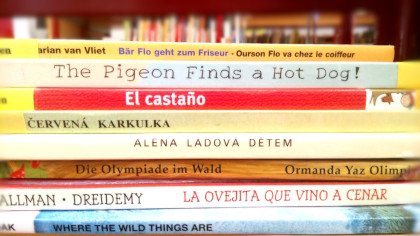
HaBilNet-partner Foyer engageert zich ten volle voor de Vlaamse voorleesweek 2024 (16 tot 24 november). Het thema dit jaar is 'Voorlezen verrijkt je wereld'. Voorgelezen worden in allerlei talen past volgens Foyer en HaBilNet perfect in dit plaatje! Je kan voorlezen in je thuistaal of zelfs in een taal die je nooit eerder hoorde…
Hoe kan je hiermee aan de slag in je klas? Hoe kan je ouders aanzetten om (meer) te gaan voorlezen? Ben je nog op zoek naar boeken, voorlezers en leuke voorleesactiviteiten?
Op vrijdag 18 oktober kan je aan een inspirerende sessie bij Foyer deelnemen. Lees er hier meer over.
Taalanalyse en taaladvies bij meertalige kinderen in Brugge: van harte gefeliciteerd!
HaBilNet gaf steun aan de ViVes Hogeschool in Brugge, België, i.v.m. een project met tot doel het opleiden van taalanalisten voor de thuistaal zodat er nagegaan kan worden of meertalige kinderen eventueel een taalleerprobleem hebben. Alhoewel de financiering van HaBilNet is afgelopen, is het rapport over het project opgesteld in de tegenwoordige tijd – hopelijk kan het nog verder lopen, met bijkomende steun van elders! Alvast gefeliciteerd met het gedane werk!

Het VIVES-team met ondersteuning van Foyer v.z.w.
Project PIM_Brugge: taalanalyse/taaladvies bij meertalige kinderen

HaBilNet ondersteunt de advieswerking van Partners In Meertaligheid bij Foyer
Ik breng mijn taal mee naar school
Lees hier de projectbeschrijving.

Liba Lingua: een leuk bordspel dat meertaligheid ondersteunt en ouders inschakelt bij het leren van het Nederlands
Deze video met de motor achter het spel, Hilde De Smedt, legt de motivatie voor Liba Lingua uit, en in deze video verklaart HaBilNet directrice Annick De Houwer waarom HaBilNet er als de kippen bij was om dit fantastische spel te ondersteunen. Geen wonder dat het spel nu al, zo kort na de lancering, zoveel succes heeft!
Onze partner Foyer vzw onthaalde Oekraïense gezinnen in Brussel
hier een leuk verslag. HaBilNet is heel dankbaar voor het initiatief van Foyer en blij dat het dit mee kon ondersteunen.
De cursus Taalanalist in een nieuw jasje
Ouders met een recente migratie-achtergrond: wat is er nodig om een kind tweetalig op te laten opgroeien?


Dr. Adam Winsler the next co-editor of Child Development!!
Hot off the press!! Our Advisory Board member Dr. Adam Winsler has just been appointed the Co-General Editor of the most prestigious academic journal in the field of developmental psychology, viz., Child Development. Starting July 1, 2025, Dr. Winsler, together with Dr. Shauna Cooper, will lead the flagship journal of the Society for Research in Child Development, the largest association assembling developmentalist, with a clear vision that HaBilNet fully supports: "SRCD takes the position that a full, integrative field of developmental science is needed to achieve a comprehensive understanding of human development and to foster the effective application of that understanding to improve human well-being", especially in these times of great political turmoil. Many congratulations to Dr. Winsler!!

First HaBilNet doctoral grant recipient gets doctoral degree
Many congratulations to the new Dr. Ekaterina Tiulkova! She just obtained her doctoral degree from the University of Toulouse, France, based on her dissertation entitled "Harmonious bilingual development in 5-year-old Franco-Russian children: exploring the mutual relationships between input, well-being, and fluency in oral production." (our translation from the original French). Find a first publication on her project here. Katia was HaBilNet's first doctoral grant recipient. We wish her all the best for her career.
Drei Jahre Fachzentrum!
Neuigkeiten vom Fachzentrum Mehrsprachigkeit
Fachtagung am 22. Mai in Frankfurt
Ein neuer Fokus auf Jugendliche und vieles mehr
Le Centre d'expertise sur le plurilinguisme au sein de l'Association des familles et partenariats binationaux en Allemagne
Das Fachzentrum Mehrsprachigkeit im Verband binationaler Familien und Partnerschaften
HaBilNet feiert das neue Fachzentrum Mehrsprachigkeit des Verbandes binationaler Familien und Partnerschaften, iaf e.V.

Es fehlt jedoch an Wissen und Informationen über Vorteile mehrsprachigen Aufwachsens, insbesondere in den Bildungseinrichtungen Kita und Schule, in Beratungsstellen, in Ämtern und Organisationen. Eltern werden verunsichert, ihre Sprache(n) und damit sie selbst werden mit ihrem sprachlich-kulturellem Hintergrund in Frage gestellt.
Mit der Einrichtung eines Fachzentrums Mehrsprachigkeit ab Januar 2022 will der Verband binationaler Familien und Partnerschaften, iaf e.V. unter Leitung von Chrysovalantou Vangeltziki, Bundesgeschäftsführerin, zum Ausdruck bringen, dass es in einem mehrsprachigen Lebensumfeld Anlaufstellen braucht, die zum Umgang mit sprachlicher Vielfalt informieren, qualifizieren und weiterhelfen.
Mehrsprachige Eltern, Kinder und Jugendliche finden hier einen „Raum" für den Austausch untereinander, für gemeinsames sprachliches Lernen und Reflektieren sowie für das eigene Empowerment. Beratung und begleitende Angebote informieren und qualifizieren sowohl Familien als auch Fachkräfte.
Das Fachzentrum Mehrsprachigkeit leistet einen Beitrag für das sprachbezogene Wohlbefinden von mehrsprachigen Familien und für ein sprachen-gerechteres gesellschaftliches Zusammenleben.
HaBilNet freut sich sehr darüber, dieses Vorhaben unterstützen zu können und steht dem Verband als starker Partner zur Seite.
HaBiLNet hat einen neuen Partner!
Als interkultureller Familienverband bietet er Workshops, Beratungen und Mitmachprojekte für Paare und Familien mit und ohne Migrationsgeschichte an. Die Angebote und ebenso die Lobbyarbeit des Verbandes liegen an den Schnittstellen Familien-, Bildungs- und Migrationspolitik.
Lesen Sie mehr über den Verband im HaBilNet Interview oder auf deren Webseite.
A symposium sponsored by HaBilNet at the XVIth Congress of the International Association for the Study of Child Language
HaBilNet is sponsoring the XVIth Congress of the International Association for the Study of Child Language
Why did HaBilNet decide to give this much support to the IASCL? Basically, to promote HaBilNet and its goals within a community of scholars that has been working more and more on bilingual development, but not necessarily from a well-being perspective, which is central to HaBilNet. The hope is that more and more child language scholars will be looking at the sociolinguistic and psychological aspects of bilingual development, in addition to its psycholinguistic ones.
Familiensprachenstark!
Im Rahmen der Transferveranstaltung gab es spannende Interviews und Diskussionsrunden mit Expert:innen aus der Politik, aus der pädagogischen und schulischen Praxis und Weiterbildung, aus Elternverbänden und der Mehrsprachigkeitsforschung. Unter anderem ging es darum, typische Missverständnisse auszuräumen, die sich immer noch um das Thema Mehrsprachigkeit ranken, und zu erörtern, wie wir das Potential von Herkunftssprachen in unseren Bildungsinstitutionen nutzen können.

Ein neues mehrsprachiges Kinderbuch
Why early WORDS are so fundamental, regardless of whether they are in one, two, or more languages
Multilingual Question Time
Everybody welcome!
Mehrsprachigkeit im logopädischen Alltag: eine online Tagung mit Workshops
Raising Bilingual Babies in Talk (RaBBiT)
Polish in the UK and Germany
Migration and what it can mean for language use
Study of Polish-German preschoolers in Germany and Austria

Deutsch-Ukrainischer Sprachschatz für die Kita-Praxis

Songs To Promote Home Languages
このウェブサイト は、バイリンガル・マルチリンガル子どもネットの啓発グループが集めた、手遊び歌の紹介サイトです。
手遊び歌は、親が赤ちゃんに話しかける絶好のチャンス。自信のあることばで赤ちゃんを育てる養育者のみなさんを応援します。
Family language loss

The importance of language choice, input, and discourse strategies for Harmonious Bilingualism
Why Speaking a Foreign Language to Your Child May Not Be a Good Idea
Une association importante en France

The role of language and multilingualism in custody cases: An interview with Bente Ailin Svendsen
Mehrsprachigkeit leben!
Mehrsprachige Kinder in unseren Einrichtungen: Hürden, Bedürfnisse und Chancen
Ein Vortrag beim Kita-Verbund in Kleinmachnow
Online Connections with Young Children

Entre Dos Podcast: a Great Resource for Bilingual Parenting
New episode with Annick De Houwer
The latest episode of Entre Dos Podcast focuses on why some children who grow up hearing two languages only use one. HaBilNet Director Annick De Houwer has done research on this question for decades. In this episode, you can hear about her findings and about ways to foster harmonious bilingualism in the family. You also find out about how Dr. De Houwer came to be interested in the question.
News Archive
In this section you find a selection of archived news items.

Intergenerational Language Transmission and Social Identity
Not only Love at First Sight but also Love at First Sounds
Trois membres de HaBilNet à Toulouse (de g. à dr.): Ekaterina Tiulkova, Annick De Houwer, et Barbara Köpke.

Une conférence sur « Le bilinguisme au sein de la famille » par Annick De Houwer
Elle y était invitée par Mme la professeure Barbara Köpke du Laboratoire de NeuroPsychoLinguistique de l'Université de Toulouse, elle-même membre de soutien de HaBilNet.
Visionnez la vidéo ici.

HaBilNet Director Annick De Houwer gave this talk on Febr. 12, 2020 at the invitation of Dr. Lourdes Ortega at the Initiative for Multilingual Studies, Georgetown University, USA. Thanks to Rima Elabdali for the video recording.
Harmonious Bilingualism in Bilingual Families
A Talk in Two Parts
In this first part she defines what she means by Harmonious Bilingualism and outlines its two main hallmarks.
In this second part she explains some of the possible ill effects that can occur when children do not speak the language their parents speak with them. She discusses what happens when young children's home languages are ignored at (pre)school and explains the importance of actively valuing all children's languages at (pre)school.
Bilingual Children in Early Childhood Education and Care
The article explains how bilingual children's well-being in early education can be enhanced if staff embraces all children's languages and their developing bilingualism. Openness towards the languages children bring to the classroom can be shown through a pedagogical approach that actively recognizes and thus values all children's languages.
The article gives several concrete tips for early education staff that will help create such a language friendly pedagogical approach and can be found in the online handbook Das Kita-Handbuch (in German).
New Book on Bilingual Children
Adam Beck's New Book is Out
Congratulations!
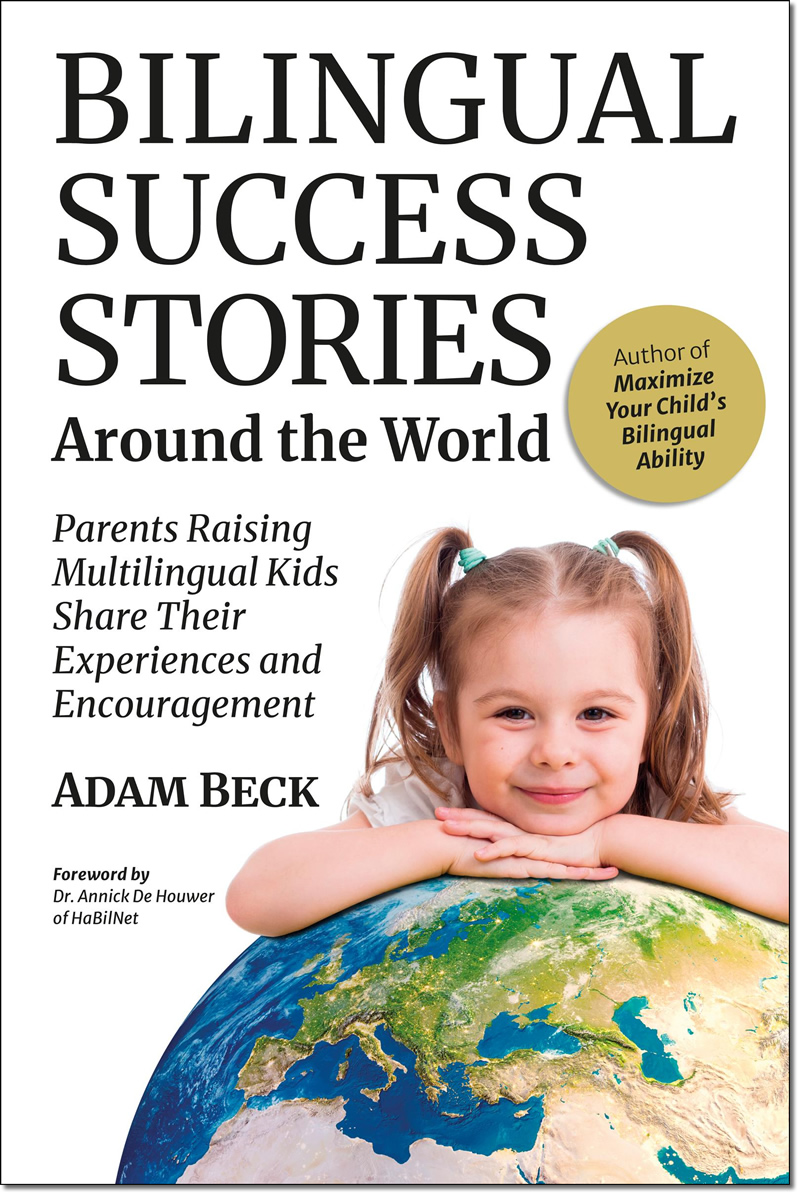
Bilingual Success Stories Around the World is 252 reader-friendly pages and is available worldwide, in both paperback and Kindle e-book, at Amazon, the global Amazon sites, and other booksellers.

Dr. Meagan Driver's new Multilingual Lab

Hoe kunnen leerkrachten bijdragen tot een succesvolle meertalige opvoeding – en dus Harmonische Tweetaligheid?
Wilhelm von Humboldt Prize 2020
Awarded to Jürgen M. Meisel


Gerald M. Mara Faculty Mentoring Award
Awarded to Lourdes Ortega

NIE Excellence in Research Award
Awarded to Sun He
only online
Georgetown University Round Table colloquium
March 13-15, 2020

HaBilNet was proud to sponsor an invited colloquium at this year's Georgetown University
Round Table (GURT), a prestigious linguistics conference.
This year's GURT was co-hosted by the IMS and MultiLing.
HaBilNet director Annick De Houwer is a member of MultiLing's Scientific Advisory Board.
We are sad and disappointed, but thank the organizers for their tremendous work in preparing the conference.
Only virtual GURT this year
by Dr. Annick De Houwer
Read More
Unfortunately, the global COVID-19 crisis led to the "live" GURT 2020, scheduled for March 13-15, to be cancelled. Instead, the GURT 2020 organizers set up a closed FaceBook page, GURT 2020 Virtual, to allow registered participants to post their contributions. HaBilNet and the speakers who were invited for the HaBilNet FLP colloquium on Finding Universal Patterns in Family Language Policies and Their Effects on Children: Evidence from Different World Regions and Different Disciplines are grateful to the organizers for this enormous effort.
You can see more about the FLP colloquium here.
March 13, 2020
Lourdes Ortega interviews Sharon Armon-Lotem

Four Decades of Service
A Publishing House Dedicated to Bilingualism
The Journal of Home Language Research has a New Website!
Talk in Japan
Emergent multilingual literacy in early childhood education and care
by Mareen Pascall | 04/01/2022 | Uncategorized | 0 Comments
This article is part of a series by HaBilNet, the Harmonious Bilingualism Network.
It considers research results about young children's bilingual language development and discusses how these results can be applied in early childhood education and care so that all children may benefit from harmonious bilingual development.
HaBilNet Travel Awards to attend GURT
by Annick De Houwer | 26/03/2020 | Uncategorized | 0 Comments
Congratulations to Sally Rachel Cook and Nishita Grace Isaac for receiving HaBilNet Travel Awards to attend the 2020 Georgetown University Round Table, even though it ended up taking place virtually.
HaBilNet2 – HaBilNet's Second Colloquium Part II
by Nina Schwöbel | 04/08/2022 | Uncategorized | 0 Comments
This is Part II of the Blog post about HaBilNet's second Colloquium which was held in May (2022) in Frankfurt, Germany. 55 participants from around the world had a great time and found the colloquium truly inspiring. Here, you can read all about the posters which early career professionals showed at the colloquium.
保護者からよく寄せられるバイリンガル子育てに関する3つの質問
by Nina Schwöbel, Annick De Houwer & Janice Nakamura | 30/10/2024 | Uncategorized | 0 Comments
HaBilNet相談室では、ご両親などご家族の方々が、具体的な質問について話し合ったり、現在のご自身のバイリンガルの状況を共有したりすることができます。この記事では、相談室に最もよく寄せられる3つの質問と、それに対するHaBilNetコンサルタントの中村ジェニスとアニック・デハゥワーによるアドバイスを紹介します。
This Is the Secret to Success in Raising a Bilingual Child
by Adam Beck | 27/08/2020 | Uncategorized | 0 Comments
Want to know the secret to success in raising a child that is actively bilingual? Find out in this blog post by HaBilNet member and consultant Adam Beck.
Raising Trilingual Children in a Monolingual Society
by Mihaela Gazioglu & Jayoung Choi | 15/02/2023 | Uncategorized | 0 Comments
Multilingual families face a language management dilemma when attempting to cultivate and support trilingualism in monolingual societies. The maintenance and development of heritage languages (HLs) for trilingual children is daunting compared to bilingual families. However, there are ways to prevent and overcome language maintenance challenges and raise trilingual children in monolingual societies.
Bilingual children do not start speaking later than monolingual ones
by Annick De Houwer & Mareen Pascall | 28/06/2023 | Uncategorized | 0 Comments
This article is part of a series by HaBilNet, the Harmonious Bilingualism Network. It considers research results about young children's bilingual language development and discusses how these results can be applied in early childhood education and care so that all children may benefit from harmonious bilingual development.
The Need for a Language-Considerate Approach in Early Childhood Education
by Annick De Houwer | 27/10/2024 | Uncategorized | 0 Comments
This article is part of a series by HaBilNet, the Harmonious Bilingualism Network. It considers research results about young children's bilingual language development and discusses how these results can be applied in early childhood education and care so that all children may benefit from harmonious bilingual development.
Supporting Bilingualism in Families, Day Care Centers and Schools
by Mareen Pascall | 17/02/2021 | Uncategorized | 0 Comments
Bilingualism is one of four major themes that the Association for Binational Families and Partnerships deals with. In this inspiring interview, Maria Ringler speaks from the Association's headquarters about supporting multilingual families, an exciting reading project for day care centers, and about her experiences with political lobbying for bilingual education.
HaBilNet2 – HaBilNet's Second Colloquium Part I
by Nina Schwöbel | 04/08/2022 | Uncategorized | 0 Comments
This past May (2022) HaBilNet organized its second Colloquium in Frankfurt, Germany. The 55 participants from around the world had a great time and found the colloquium truly inspiring. Read all about it in our blog article, divided into two parts: this first one about the colloquium as a whole.
保護者からよく寄せられるバイリンガル子育てに関する3つの質問
HaBilNet相談室では、ご両親などご家族の方々が、具体的な質問について話し合ったり、現在のご自身のバイリンガルの状況を共有したりすることができます。この記事では、相談室に最もよく寄せられる3つの質問と、それに対するHaBilNetコンサルタントの中村ジェニスとアニック・デハゥワーによるアドバイスを紹介します。
Storytelling for language maintenance and mental well-being
This blog article aims to address the mental well-being of bilinguals who suffer from a lack of space for using their first language(s). It discusses how a storytelling approach to language maintenance can be beneficial for improving mental well-being and draws on data collected during the research project. The main focus of this blog article is on the procedures used in the project.
HaBilNet2 – HaBilNet's Second Colloquium Part I
This past May (2022) HaBilNet organized its second Colloquium in Frankfurt, Germany. The 55 participants from around the world had a great time and found the colloquium truly inspiring. Read all about it in our blog article, divided into two parts: this first one about the colloquium as a whole.
HaBilNet2 – HaBilNet's Second Colloquium Part II
This is Part II of the Blog post about HaBilNet's second Colloquium which was held in May (2022) in Frankfurt, Germany. 55 participants from around the world had a great time and found the colloquium truly inspiring. Here, you can read all about the posters which early career professionals showed at the colloquium.
Raising Trilingual Children in a Monolingual Society
Multilingual families face a language management dilemma when attempting to cultivate and support trilingualism in monolingual societies. The maintenance and development of heritage languages (HLs) for trilingual children is daunting compared to bilingual families. However, there are ways to prevent and overcome language maintenance challenges and raise trilingual children in monolingual societies.
Emergent multilingual literacy in early childhood education and care
This article is part of a series by HaBilNet, the Harmonious Bilingualism Network.
It considers research results about young children's bilingual language development and discusses how these results can be applied in early childhood education and care so that all children may benefit from harmonious bilingual development.
Answers to the three most common parental questions on raising bilingual children
A HaBilNet consultation allows parents or other family members
to discuss specific questions and/or share their current situation. In this article we would like to share the three most frequently asked questions and outline the advice that HaBilNet consultants Janice Nakamura and Annick De Houwer provide in response.
Supporting Bilingualism in Families, Day Care Centers and Schools
Bilingualism is one of four major themes that the Association for Binational Families and Partnerships deals with. In this inspiring interview, Maria Ringler speaks from the Association's headquarters about supporting multilingual families, an exciting reading project for day care centers, and about her experiences with political lobbying for bilingual education.
Bilingual children do not start speaking later than monolingual ones
This article is part of a series by HaBilNet, the Harmonious Bilingualism Network. It considers research results about young children's bilingual language development and discusses how these results can be applied in early childhood education and care so that all children may benefit from harmonious bilingual development.
Supporting bilingual children's socio-emotional wellbeing
Read an interview with supporting HaBilNet member Dr. He Sun on how bilingual children's socio-emotional wellbeing can be supported in the home and school contexts.


